Scout Ventures: A Pioneering Seed-Stage Dual-Use Investor
In today’s global scenario, the need for breakthrough innovation in national security has never been greater. Yet the transition from promising frontier technologies to real-world defense capability remains one of the most complex journeys in modern business. Sitting at the center of this transformation is Scout Ventures, a seed-stage venture capital firm that has quietly become one of the most influential players in dual-use innovation—where defense-grade capability meets commercial viability. With more than 50 companies spanning AI, autonomy, space systems, robotics, and advanced materials, Scout Ventures has earned its reputation as the leading seed-stage dual-use investor. Their mission is unambiguous: help founders transform frontier technology into tools that strengthen the United States and its allies, while also fueling long-term commercial success.
The firm doesn’t just invest—it steps directly into the operational and strategic gaps that often derail promising dual-use startups. While many venture firms pride themselves on rapid deal flow, Scout deliberately moves in the opposite direction, spending five to six months on market mapping, customer discovery, and non-dilutive funding alignment before writing a single check. This approach pays off; for every dollar Scout invests, their companies earn three dollars of non-dilutive capital—a remarkable level of capital efficiency made possible by planning before the ink is dry.
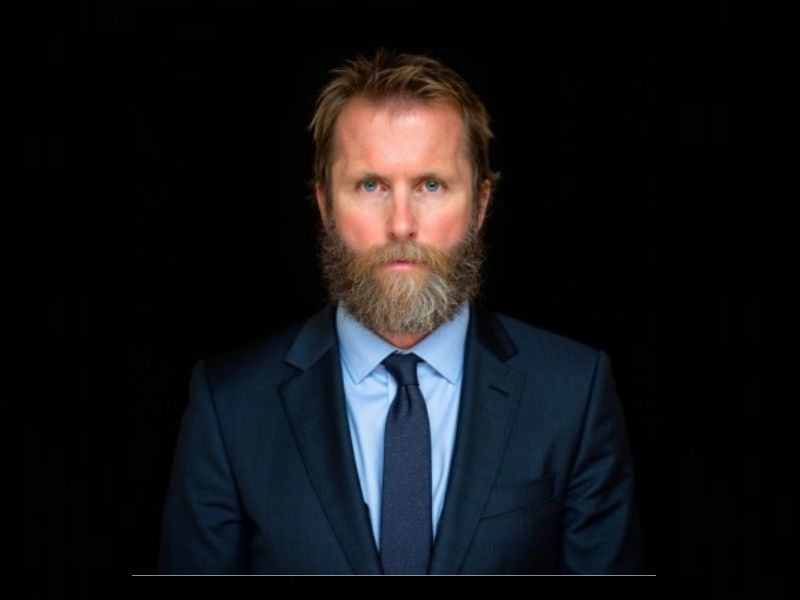
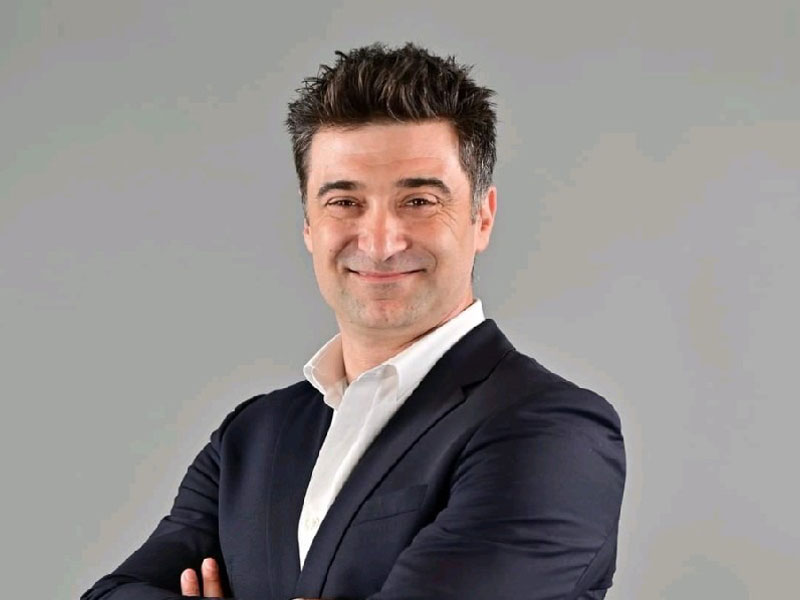
The source of this discipline is the Managing Partner, Bradley C. Harrison, whose career weaves through West Point, Army Ranger service, MIT Sloan, AOL, and more than two decades in venture capital. His hybrid background explains why Scout operates with a dual lens: one grounded in national security priorities and one grounded in commercial scale. “A big part about being a great investor is really about being a great leadership coach,” he says, a nod to Scout’s hands-on approach, which includes guiding founders through tough decisions, from restructuring teams to repositioning product strategies.
Harrison’s connection to the defense mission is not theoretical. His pivot toward national security innovation came after the loss of a West Point classmate in combat, a moment that reshaped his purpose and ultimately the firm’s. From that point forward, Harrison committed his career to supporting technologies that would protect U.S. service members and strengthen national resilience. That mission-first philosophy now permeates every investment decision Scout Ventures makes. “We don’t start with profits,” Harrison emphasizes. “We start with solving the mission to make the world a better, safer place.”
One of the clearest demonstrations of Scout Venture’s value lies in its interventions before companies even raise capital. Many founders entering the defense ecosystem underestimate the difficulties of non-dilutive funding. Scout reduces this friction by pre-mapping the available funding buckets—whether through DoD, the Texas Space Commission, or federal innovation programs—and establishing relationships with program officers before a founder files their first application. Timelines of two to three years are common, and Scout Ventures ensures that the companies in their portfolio understand both the waiting period and the milestones required to sustain momentum. This deep-preparation model extends to supply chain navigation. The company routinely encounters challenges such as components being manufactured almost entirely in China, which can make certification for defense use nearly impossible. Rather than leaving founders to struggle alone, Harrison personally engages with industry leaders—such as Jamie Dimon of JPMorgan—to spur domestic manufacturing of critical components like motors and sensors. This rare level of direct involvement speaks to Scout’s commitment to long-term systemic impact rather than short-term returns.
Scout’s portfolio success stories illustrate how these upstream efforts translate into accelerated growth. Tomahawk Robotics, one of the firm’s notable exits, began as a services-based company. The team immediately recognized that, to scale and attract strategic contracts, Tomahawk needed to pivot to a product-centric model. After challenging the founders to rethink their approach, the company restructured its entire vision—and the transformation led to major growth and an eventual successful sale.
Stories like these underscore how Scout Ventures functions not as a passive investor but as a central node connecting founders, defense stakeholders, and global partners. Moreover, the company’s strategy relies heavily on investing in hard-to-access founders: elite veterans, intelligence community alumni, and researchers from premier defense labs like Los Alamos and Sandia. These individuals bring unmatched domain knowledge and operational experience, allowing Scout to back technologies that move quickly from prototype to deployment. With their background, Scout can successfully guide founders through the realities of scaling a company, balancing mission focus with capital efficiency, and navigating the pressures of working in defense innovation. Harrison frequently describes his role as providing the structure, coaching, and reality checks that first-time founders—and even highly accomplished veterans—often need.
Today, Scout Ventures is preparing to close its largest fund to date, a $125 million vehicle designed to expand its reach, strengthen ties with NATO and Pacific allies, and increase its ability to anchor early-stage rounds in this fast-moving domain. With relationships across Washington D.C., Europe, and the Indo-Pacific, Scout is positioned to shape the future of dual-use technology across global defense networks. From decoding supply chain vulnerabilities to aligning startups with multibillion-dollar national security programs, Scout Ventures has emerged as a force shaping the next generation of defense/dual-use innovation.